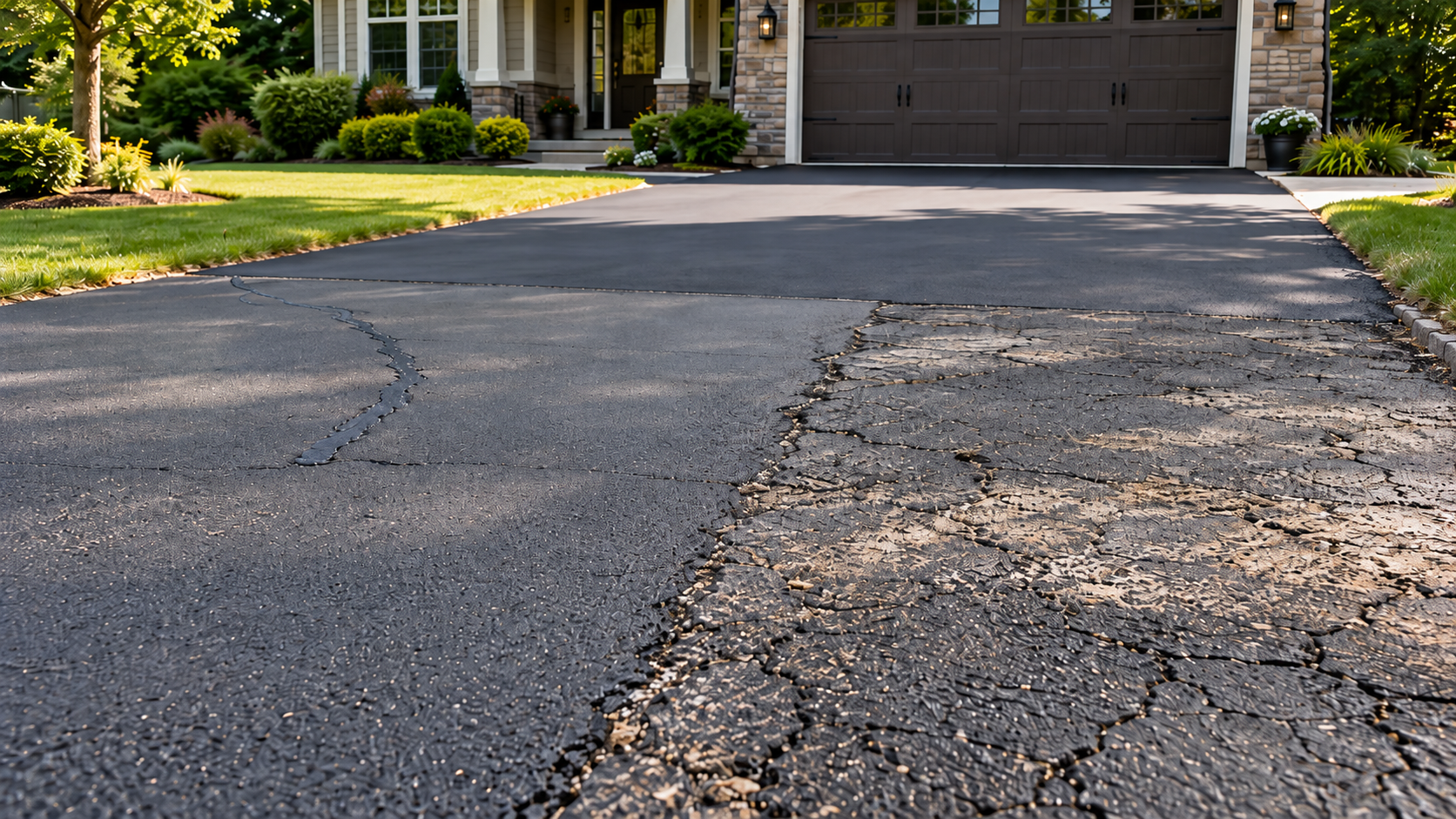
Get the driveway ready before the first hard freeze by keeping water and salt out of open cracks, not by starting a big project in the cold. Clean the surface, fill the cracks, fix drainage, and sealcoat only while the weather is still warm and dry enough for the coating to cure.
Winter prep on an asphalt driveway in the Lehigh Valley is mostly that. Water gets into small openings, freezes, and the damage shows up as wider cracks and potholes by spring.
When should you sealcoat before winter?
Sealcoat in the fall, while the air and the pavement are still above 50°F and you have a dry day ahead, or wait until spring.
Fall is the last comfortable window. Milder temperatures let sealant and crack filler cure and bond. A sealer needs a dry stretch of about 24 hours. If the temperature drops or rain arrives too soon, the coating does not bond and the surface goes into winter unprotected. For Pennsylvania, plan to finish by mid-November. If you miss that, wait for early spring. Sealcoating in winter is not recommended. Cold-mix products are a temporary patch, not a sealer.
Sealcoating is a waterproof layer over the asphalt. It keeps out water, salt, and deicing chemicals and slows the freeze-thaw action that opens cracks. Plan to sealcoat again every two to three years, depending on traffic and what the fall inspection shows. If the black surface has faded to a dull gray and feels rough, the coating is worn thin.
Do not sealcoat over dirt, leaves, or standing water. Sweep first, clear the cracks, and make sure water runs off instead of sitting in low spots.
What does freeze-thaw do to cracks?
Water in a crack freezes, expands, and opens that crack a little more each cycle until it becomes a pothole.
Autumn rain or melting snow enters a hairline crack or a porous spot. Overnight the water freezes and pries the crack wider. The next day it thaws, more water gets in, and the cycle repeats. Day and night temperature swings in the Lehigh Valley make that harder on a driveway. Water that reaches the base can leave voids under the surface. The pavement then breaks into potholes, crumbling edges, or spalling by late winter or early spring.
Frost heave is the related problem under the driveway. Water in the soil freezes, lifts the surface, and spreads cracks or leaves the slab uneven. Leaves and other debris hold moisture against the asphalt, so a crack that looks small in October is the one that grows.
Fill those cracks before a hard freeze. Rubberized or asphalt-based filler is the material for small cracks. For a pothole, cold patch, also called cold mix, is a temporary winter repair that holds until a permanent fix in spring. Cracks wider than about half an inch, or trouble on a high-traffic lot, are the point to call a professional instead of treating it as a weekend job. Soft spots along the edges are a sign water is already under the pavement.
Is rock salt safe on asphalt?
No. Rock salt works into cracks and speeds the same freeze-thaw damage you are trying to prevent.
Ice control is still a safety step. Use a gentler product than standard rock salt. Calcium magnesium acetate is the one named most often, and potassium chloride is the other. Even those products can get into porous concrete and widen damage, so use them sparingly and sweep up what is left after the ice melts. Clear the surface without salt when you can.
Salt left on an unsealed, cracked driveway is part of why the cracks should be filled and, when the weather allows, the surface sealed before winter. Untreated cracks invite standing water, snow, and salt together.
How should you plow or shovel a driveway?
Keep the blade off the pavement edges, use a plastic shovel where you are clearing by hand, and do not pile snow where it will melt back toward the garage all season.
Plow blades catch raised seams, sunken joints, and failed edges, especially once a thin crust hides them. Mark those edges and the driveway boundaries with high-visibility stakes so the operator can see them, and lift the blade at those transitions. A gouge along the apron becomes a spring repair. A plastic shovel is the hand tool that does not scrape the surface the way a metal edge can. Set a snow blower so it is not digging into the asphalt.
Where the snow is stacked matters as much as how it is moved. A pile that melts back across the driveway feeds water into the same cracks all winter. Keep the melt path off the garage apron.
What else should you do before the first freeze?
Clean the surface, clear the drains, and look at the driveway while you can still see it.
Leaves, twigs, and other debris hold moisture on the asphalt and clog storm drains, swales, and gutters. Blow or sweep the driveway, then check the drains after the leaves drop. Direct gutter downspouts that dump onto the pavement off the asphalt. After a rain, look for puddles. Standing water is the condition most directly tied to freeze-thaw damage. Low spots may need a patch or a drainage correction, not another coating on top of a pond.
Walk the driveway while it is still visible. Photograph cracks, potholes, and wet spots. Note cracks that are already wide. Check the edges for soft areas. Deep cracks, crumbling edges, fading across a large area, and drainage that never dries are the signs to call a crew instead of doing the work yourself. Cut back grass, weeds, and roots along the edge so they are not holding water against the pavement.
If the base is failing, wide cracks run the length of the driveway, or the surface is shifting or sinking, crack filler and sealcoat are not enough. Resurfacing or replacement belongs in the plan, and it has to happen while temperatures still allow the work. Spot repairs on a sound base can wait for a warmer window if you have already kept water out.
When you want that walk done with you, request an estimate or call (610) 751-0998. Crack filling and sealcoating are the two jobs to finish while the materials can still cure.
Questions homeowners ask
Can you sealcoat in winter?
No. Sealcoating needs temperatures above 50°F and dry weather. For Pennsylvania the safe window runs from late October to mid-November. After that, wait until spring. Cold patch is the temporary product for potholes in the cold, not a sealer.
Does a cold patch last through winter?
Cold patch is a temporary fix for a pothole so the hole does not keep taking water until a permanent repair can be made in spring. It is not a finished surface.
What temperature is too cold for asphalt work?
Most paving and sealing should wait until both the air and the pavement are above 50°F. Below that, the material may not cure or last.
How do you winterize a gravel driveway?
Fill and grade low spots before winter so meltwater does not sit and wash the stone out. Go easy on deicers, and set the plow or blower high enough that it does not peel the gravel off with the snow.