Resurface a driveway when the base is still sound and the wear is on the surface. Replace it when the base, the drainage, or the structure is what is failing.
A tired-looking driveway in the Lehigh Valley raises one first question: not what new asphalt costs, but whether the structure underneath can hold another surface. Putting a new layer over a failing base wastes the money.
What is resurfacing?
Resurfacing is a new layer of asphalt, usually about an inch and a half to two inches, laid over the driveway you already have.
The old surface stays in place and becomes the base for the new top. It refreshes the look, smooths minor flaws, and adds years when the bones are still good, without tearing the driveway out. Resurfacing covers cosmetic wear and small cracks. It does not fix what is happening underneath. Faded gray asphalt, by itself, is normal. Color is not the test. The stone base and the drainage are.
When does resurfacing make sense?
Resurface when the driveway still holds its shape, the cracks are shallow, and water runs off.
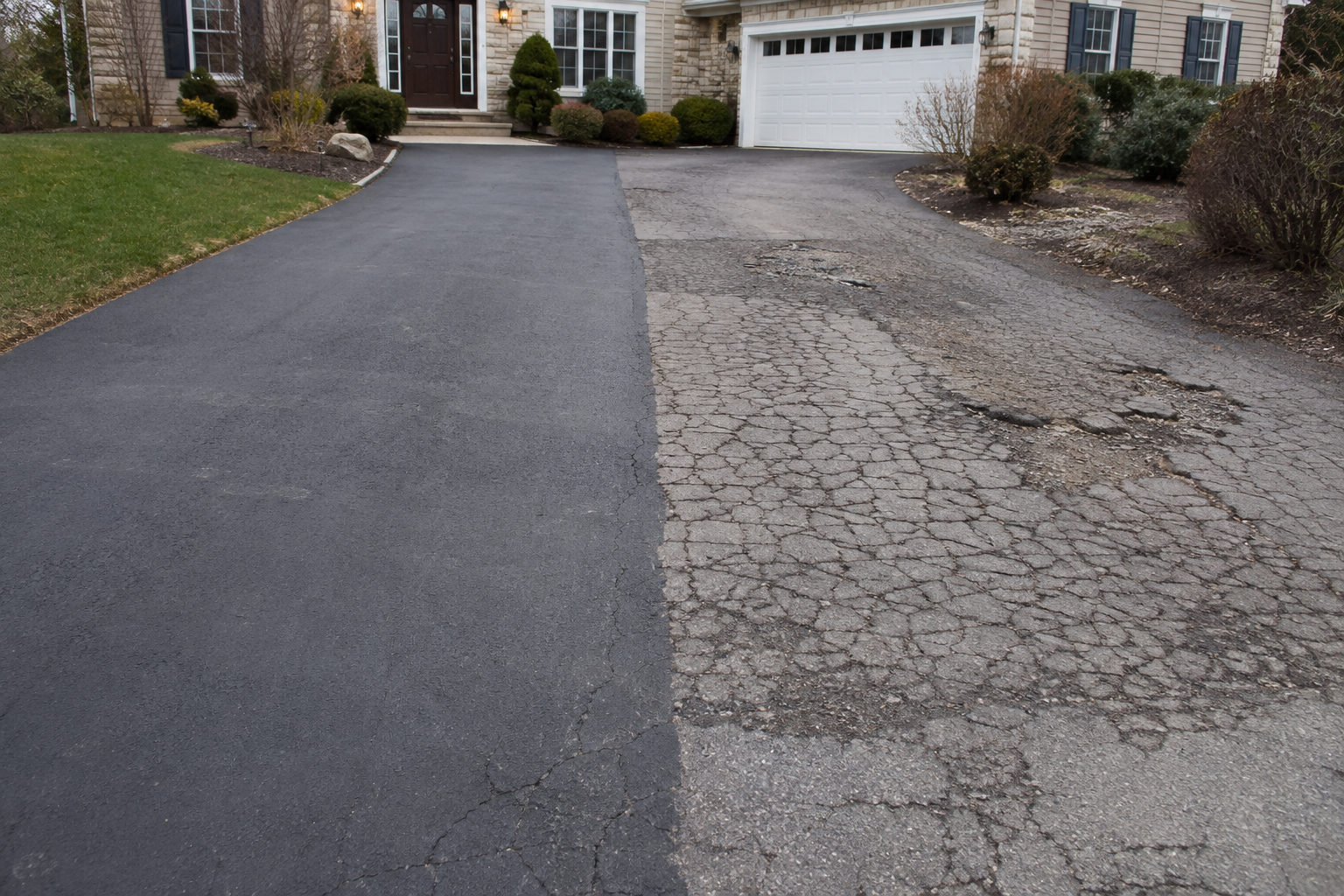
The signs are straightforward. The base is solid, with no soft spots or sinking. Cracks are surface-level and not webbed across large areas. The driveway drains after rain instead of pooling in the same low spots. Potholes are not coming back. The surface is structurally sound and mostly tired. In that case resurfacing is the smaller job and, for the right driveway, the better value.
The base has no soft spots and nothing is sinking. Cracks stay on the surface instead of webbing across large areas. Rain runs off instead of sitting in the same low spots. Potholes are not a habit. The surface is tired, not broken. If that is the driveway, resurfacing is the smaller job and the one that can be the better value.
If the driveway is still structurally sound and only needs upkeep, maintain it with sealcoating and patching rather than either a new layer or a full rebuild.
When is replacement the honest answer?
Replace the driveway when the base is moving, the cracking is structural, or water sits in the same places every winter.
Replacement means taking the old asphalt off, repairing or rebuilding the base, and laying a new surface. It costs more. For a failing driveway it is the repair that lasts. The warning signs are: a base that is soft, shifting, or washed out; alligator cracking across the surface; potholes that return after patching; flex or rutting under the tires; water that pools or freezes in the same spots; a driveway that is broadly worn out after 20 or more years. Resurfacing those conditions hides the problem for a season or two. The cracks come back through the new layer.
Choosing the cheaper overlay on a driveway that needs replacement is not a savings. You spend the money twice. Resurfacing does cost less than a full replacement, and on the right driveway it is the better value. On the wrong one it is a temporary cover. The cheaper choice over the next ten years is the one that matches the condition of the driveway.
In those failing cases the new layer does not stop the movement. Cracks telegraph back through. Potholes that were patched come back because the base under them was never rebuilt. Water that sat all winter finds the same low spot under the new top.
What does freeze-thaw change in the Lehigh Valley?
Water in the cracks freezes, expands, and works the surface apart a little more every winter, faster when the base is already weak.
Winters in the Lehigh Valley change the decision. Water gets into cracks, freezes, expands, and works the surface apart a little more each cycle. A driveway in Bethlehem or Easton with a weak base loses a resurfacing job sooner than one with a solid foundation, because the movement underneath does not stop. Look at the base and the drainage before you put on a new top.
An owner walk-through checks the base, the drainage, the cracking pattern, and the age. A driveway can look the same on top whether the base is fine or failing, so the surface alone is not enough. For a broader look at how asphalt pavements are designed to perform over time, the Asphalt Pavement Alliance has useful background.
How do you decide?
Have the base and the drainage looked at before you pick a price.
- Resurface when the base is sound and you need a new wear surface.
- Replace when drainage, the base, or structural failure is causing the damage.
- Maintain with sealcoating and patching when the driveway is still structurally sound.
Residential driveway paving includes resurfacing when the driveway qualifies. If you are in Lehigh County or the western side of Northampton County and you are not sure which way the driveway leans, request an estimate or call (610) 751-0998. The walk-through is what should settle it.
Questions homeowners ask
Is a gray driveway ready for replacement?
No. Faded gray asphalt is normal. The question is whether the stone base and the drainage still work.
How thick is a resurfacing layer?
A new layer is usually about an inch and a half to two inches over the existing driveway.
Why not just take the lower price?
Resurfacing costs less than replacement only when the base can support it. On a failing base, the new layer cracks through and the replacement still has to be done.